
Pregnancy and birth are powerful physiological experiences. As an osteopath providing pregnancy care on the Gold Coast, I support many women preparing their bodies for birth and postpartum recovery.
When it came to my own births, I approached them the same way I approach my clinical work: with preparation, movement, education, and trust in the body’s physiology.
I had two home births with a private midwife, both water births, where we chose to find out the sex of our babies at birth. My first baby was a boy, and my second a girl.
Every birth is different, but preparation played a huge role in helping me feel calm, informed, and supported.
Birth preparation
Staying Active and Strong During Pregnancy
Movement and strength were and important part of both of my pregnancies.
I continued exercising at the gym throughout both pregnancies until around 38 weeks, which helped me feel strong and capable as my body changed.
In the final weeks, I shifted toward mobility, stretching, and gentle movement at home, allowing my body to stay relaxed and comfortable leading into labour.
After both births, I prioritised recovery first and then returned to the gym around 5 weeks postpartum, gradually rebuilding strength, pelvic floor function, and confidence in my body.
Pregnancy Yoga and Movement
I attended around 20 prenatal yoga classes at Deva Co Yoga.
These classes focused on:
Breathwork for labour
Pelvic mobility
Active birth positioning
Nervous system regulation
They also provided a supportive environment to connect with my body and other women preparing for birth.
Osteopathic Care During Pregnancy and Postpartum
I also received regular osteopathic treatment throughout both pregnancies and postpartum periods, which supported my body through the physical demands of pregnancy and birth.
This included:
Pelvic and spinal balance work
Rib and diaphragm treatment for breathing
Nervous system support
Internal pelvic floor assessment and treatment
Pelvic floor function plays a key role in both birth preparation and recovery, and having support in this area can make a significant difference.
Alongside osteopathy, I also had acupuncture treatments at Being Acupuncture, which I found supportive at different stages of pregnancy.
Education
During pregnancy, I focused on learning about birth physiology, pelvic health, and postpartum recovery.
Some of the books that influenced my approach included:
Reclaiming Childbirth as a Rite of Passage
The Postnatal Depletion Cure
Ina May's Guide to Childbirth
Placenta: The Forgotten Chakra
I also completed advanced training in Birth Preparation and Pelvic Health, which deepened my understanding of:
Physiology and biomechanics of birth
Active birth positions
Pain neuroscience
Pelvic floor function
Postpartum recovery
Prenatal Midwife Support
Throughout both pregnancies, I had regular appointments with my private midwife.
This gave me space to ask questions, feel supported, and build trust in my birth team, something I believe is incredibly important for a positive birth experience.
My first midwife was Melanie Rainger.
My second midwife was Libby Lamb.
Homebirth Stories
My First Birth Story (Water Birth at Home)
27 hour labour (9 hours active)
At 12:30am, my waters began slowly releasing. By 5:00am, I was using a TENS machine while resting on my side in bed.
I stayed resting for most of the morning, then moved to a birth ball, leaning forward onto pillows between contractions.
By the afternoon, contractions intensified and hip squeezes on all fours were incredibly helpful.
Around 3:00pm, I moved into the birth pool, where I stayed mostly side-lying.
By the evening, I used low vocal sounds (“ohh” and “ahh”) to move through contractions.
At around 10:00pm, I began feeling the Ferguson reflex, the body’s natural urge to push.
My body alternated between:
Kneeling and rocking during strong contractions`````1
Side-lying with knee rocking during smaller contractions
At 12:11am, my baby boy was born in the pool. He arrived nearly on his due date, 11 minutes into the next day.
I stayed in the water for an hour, then moved to bed to breastfeed.
At 3:00am, I birthed the placenta in a squat.
I had a small tear but chose to heal naturally without stitches.
My Second Birth Story (Water Birth at Home)
14 hour labour (4 hours active)
My second birth progressed more quickly.
Contractions began at 11:00am, and by 6:00pm I was using the TENS machine again.
We filled the pool at 8:00pm, my waters broke, and I entered the pool around 9:00pm.
At 1:08am, my baby girl was born in the water.
Just like my first birth, we found out the sex at the moment of birth.
What Helped Me Most During Labour
Understanding birth physiology
Practising active birth positions
Using breathing techniques
Having strong support from my birth team
Trusting my body
Being in my safe place at home
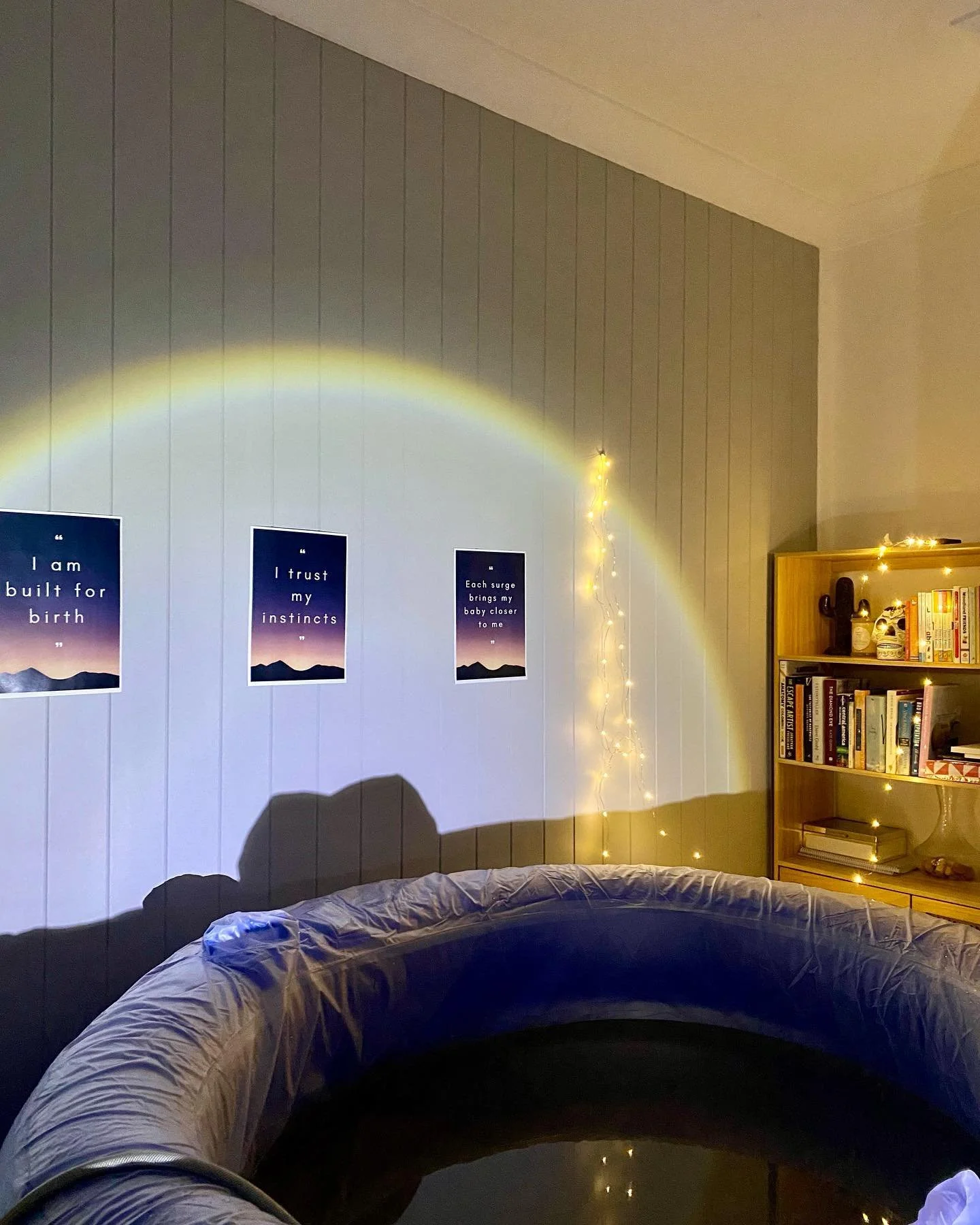
My birth space, in my bedroom.
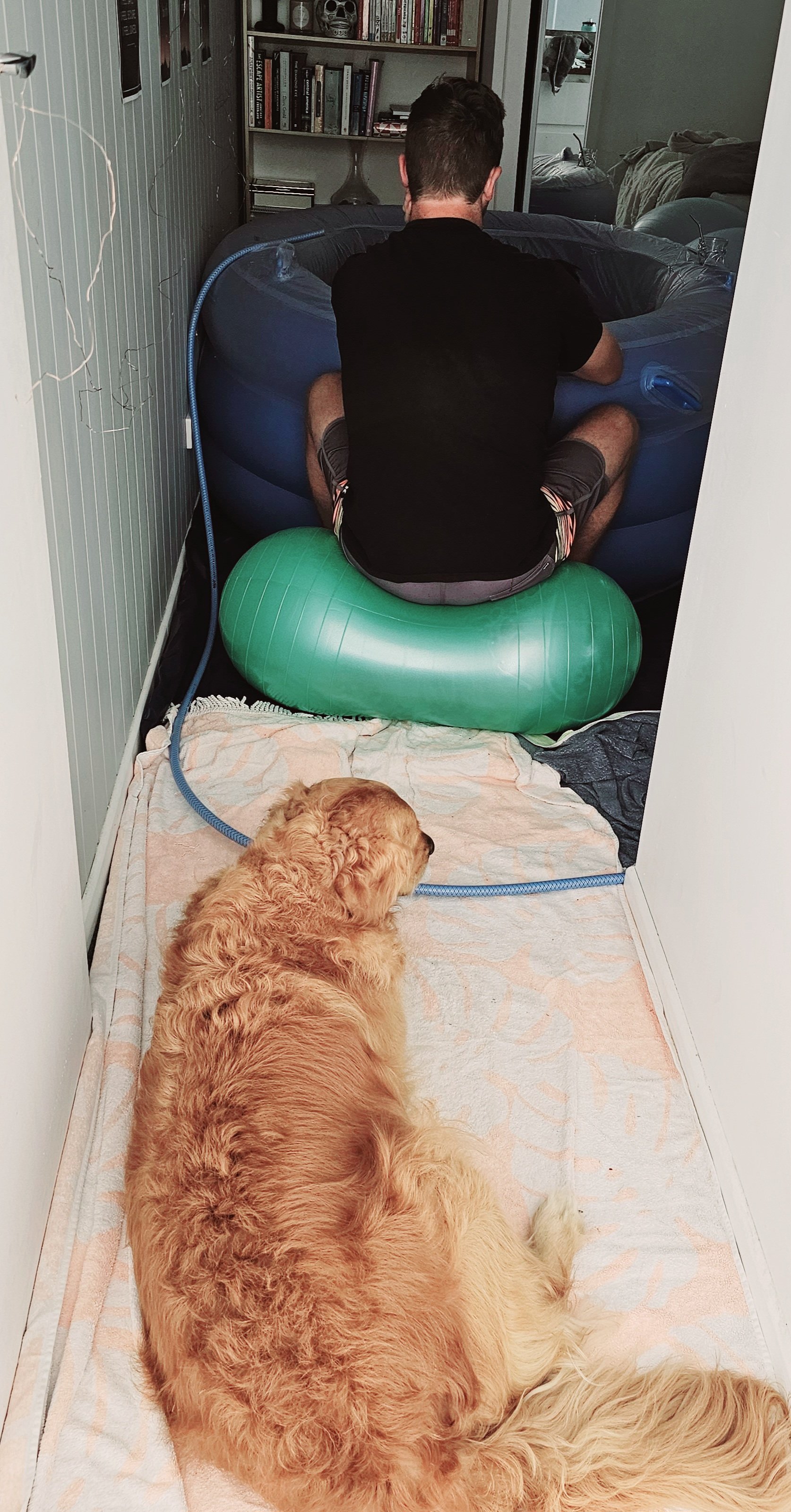
My birth team, my husband and my dog. Midewife taking the photo.
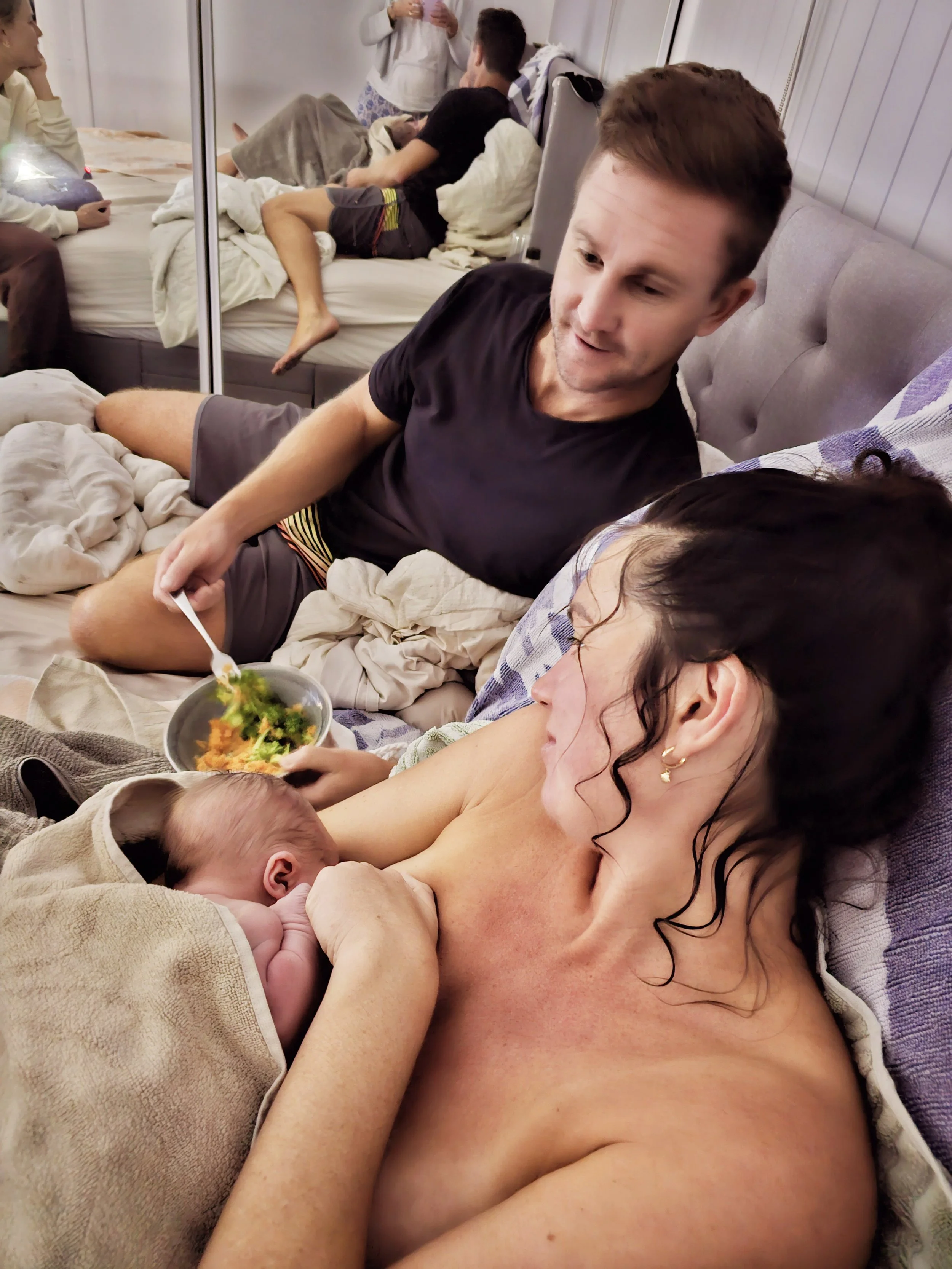
First breastfeed in bed and after birth meal of leftover sweet potato mash and steamed broccoli.